


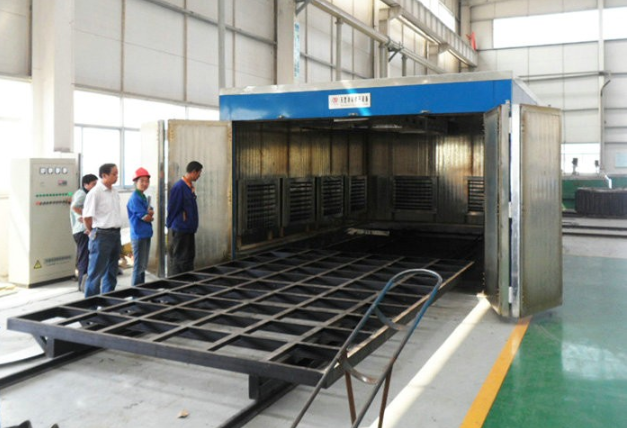

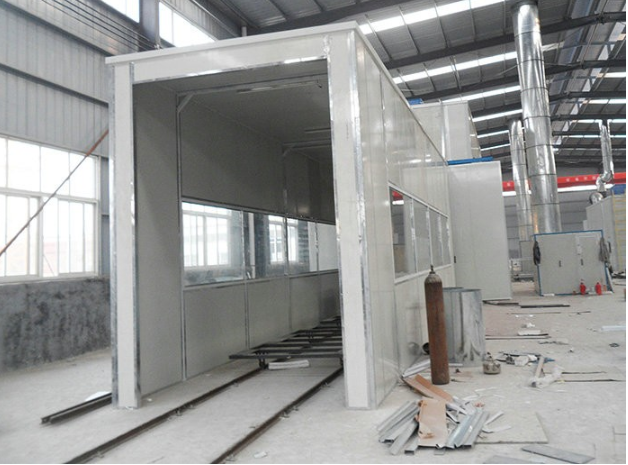


Working principle of high and low temperature drying equipment:
(1) Compression process: low-temperature and low-pressure refrigerant gas is compressed by the compressor into high-temperature and high-pressure gas. At this time, the work done by the compressor is converted into the internal energy of the refrigerant gas, causing its temperature and pressure to increase. In thermodynamics, it is called an adiabatic process.
(2) Condensation process: The high-temperature and high-pressure refrigerant gas from the compressor flows through the condenser, uses wind or water to continuously release heat to the outside world, and condenses into a medium-temperature and high-pressure refrigerant liquid. During liquefaction, the temperature of the refrigerant decreases but the pressure remains unchanged, which is called an isobaric process in thermodynamics.
(3) Throttling process: The medium-temperature and high-pressure refrigerant liquid coming out of the condenser becomes low-temperature and low-pressure refrigerant liquid after being throttled by the throttling device. In thermodynamics, it is called an isenthalpic process.
(4) Evaporation process: The low-temperature and low-pressure refrigerant liquid coming out of the throttling device flows through the evaporator, continuously absorbs heat into the room with wind or water, and evaporates into low-temperature and low-pressure refrigerant gas. The absorbed heat becomes the latent heat of the refrigerant. Although the temperature does not rise much, the internal energy increases a lot. Since the pressure does not change much, it is called an isobaric process in thermodynamics.
High and low temperature drying equipment