



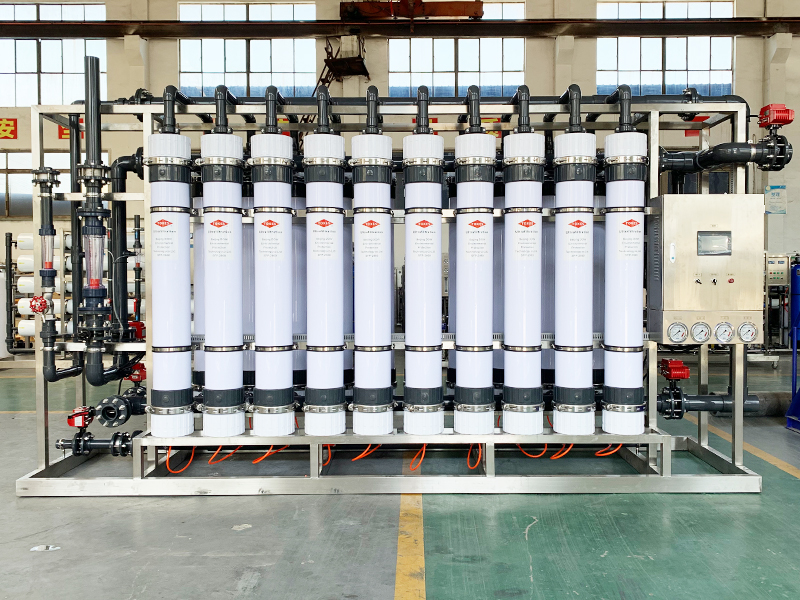
Ultrapure water equipment process introduction[[[DTI18N_TAG_8] ]]
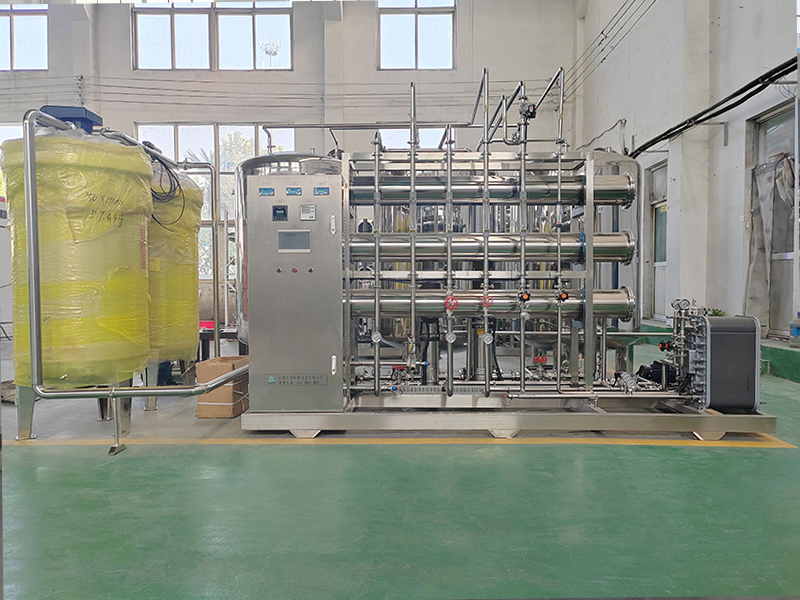
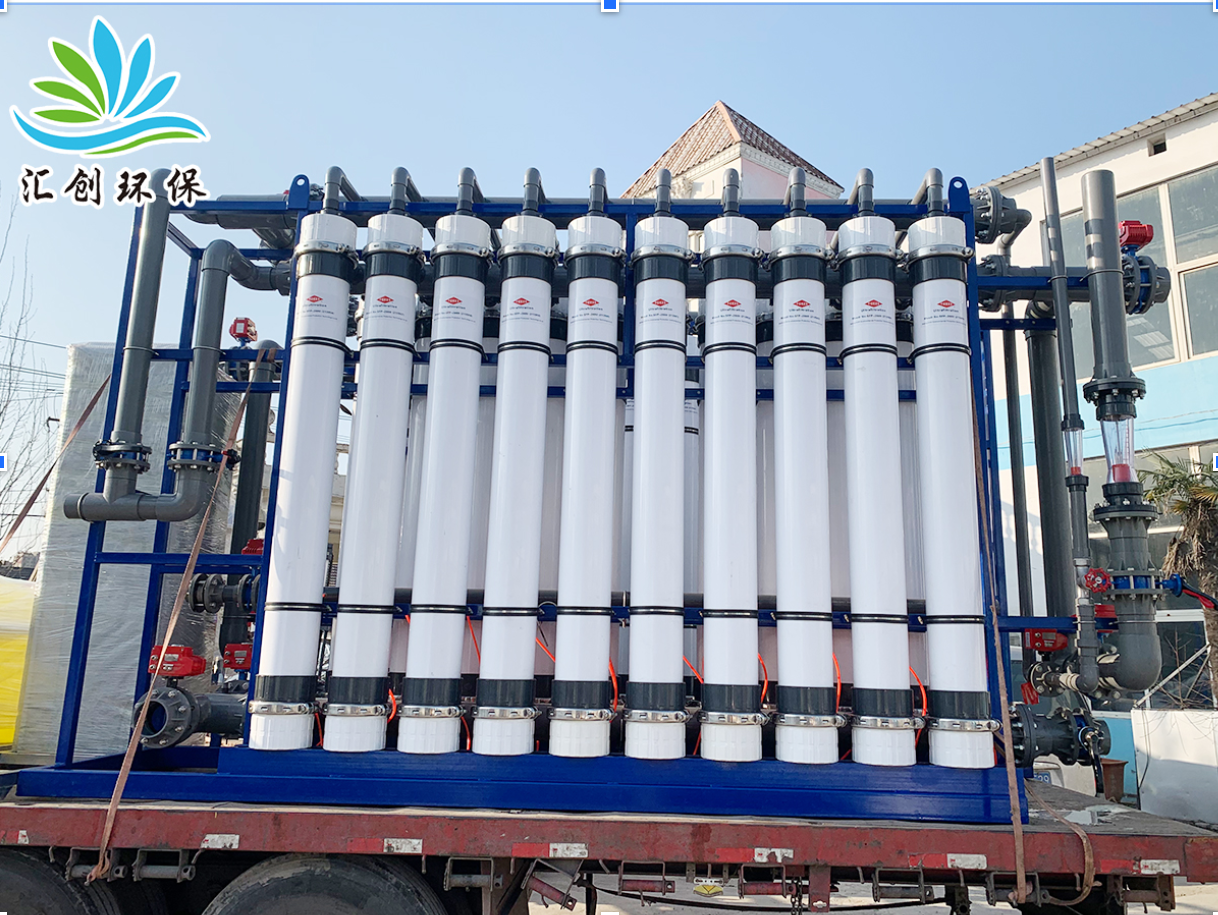
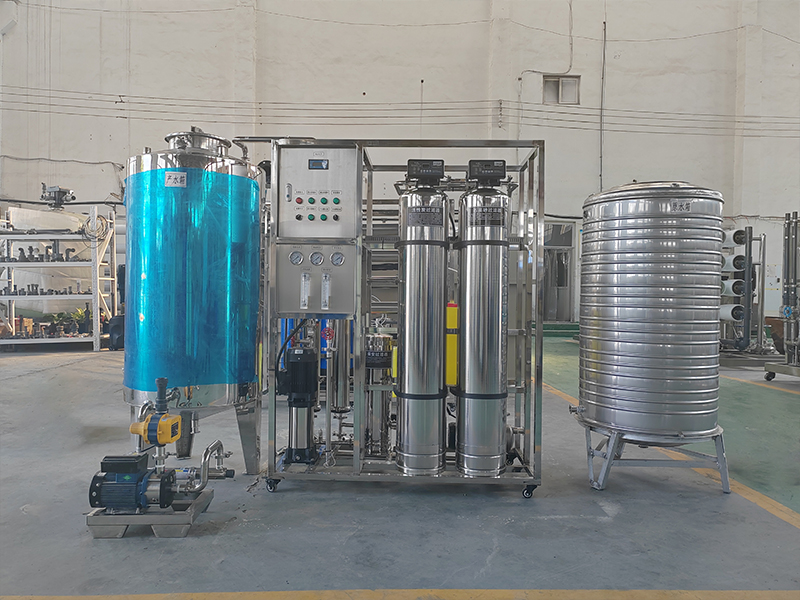
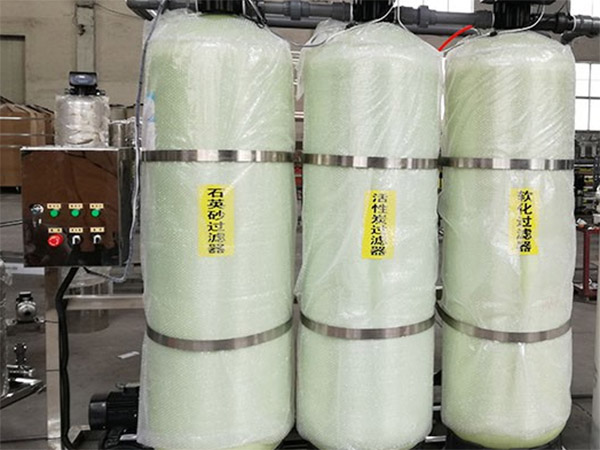
Preprocessing: Pre-process the raw water to improve the quality of the water supply to meet the requirements, reduce and delay membrane pollution, and extend its life. The main objects it treats are Microorganisms, bacteria, colloids, organic matter, heavy metal ions, solid particles and free chlorine in the water are required to meet the water inlet requirements of the reverse osmosis device and ensure the long-term stable operation of the reverse osmosis device. It consists of sand filter, carbon filter, antiscalant dosing device and security filter. [[[DTI1 8N_TAG_33]]] Sand filter: Filter out sediment, impurities, and suspended solids in the water, and reduce the SDI (pollution index density) value of the raw water. Carbon filter: It has dual functions, one is adsorption; the other is filtration. It filters out chemical organic matter, heavy metals, color, odor, residual chlorine, etc. in the water to improve water quality. [[[DTI18N_TAG_ 50]]] Antiscalant dosing device: By adding an appropriate amount (3-5PPM) of scale inhibitor, the scaling tendency of calcium, magnesium, carbonate, sulfate and other ions in the raw water is inhibited, which is beneficial to the removal of hardness ions by the membrane and prevents membrane scaling. [[[D TI18N_TAG_59]]] Security filter, 5 micron PPF filter element, intercepts objects larger than 5 microns and extends the life of the membrane. Reverse osmosis device: The separation pore size of the membrane is 10-6CM-10-7CM, which can remove organic matter (such as trihalomethane intermediates, colloids, suspended solids, microorganisms, bacteria, algae, mold, etc.), heat sources, viruses and other substances in the water. The water after the fluid has been pretreated by the first three stages is reverse osmosis RO After the deep separation treatment of the membrane host, the water that is beneficial to human health is allowed to pass through, and the water that is not beneficial to human health is eliminated. The desalination rate 98%, the pure water produced enters the pure water tank; the membrane filtration is divided into one-stage or two-stage reverse osmosis treatment. TAG_91]]]EDI electrodialysis device: Continuous electrodesalination (EDI) uses a mixed ion exchange resin filled in a fresh water chamber to adsorb anions and cations in the water. At the same time, these adsorbed The ions undergo lateral electromigration under the action of DC voltage, and enter the concentrated water chamber through the anion and cation exchange membrane respectively to be removed; on the other hand, in the direction of the feed water advancement, as ions are continuously removed, the conductivity of the solution becomes lower and lower, and the water will dissociate under the action of DC voltage to produce sufficient H+ and OH- ions are used to maintain the current flow of the system. The H+ and OH- ions produced by the dissociation of these waterIn addition to lateral electromigration, OH- will also regenerate the resin with adsorbed ions in situ, thereby achieving continuous deep desalination. There should not be too many ions in the feed water.[[[DTI18N_TAG_1 20]]] The applied DC voltage must reach a certain value. EDI technology can replace traditional ion exchange (DI) devices to produce ultrapure water with a resistivity as high as 10-18MΩ·CM. [[[DTI18N_TA G_131]]]